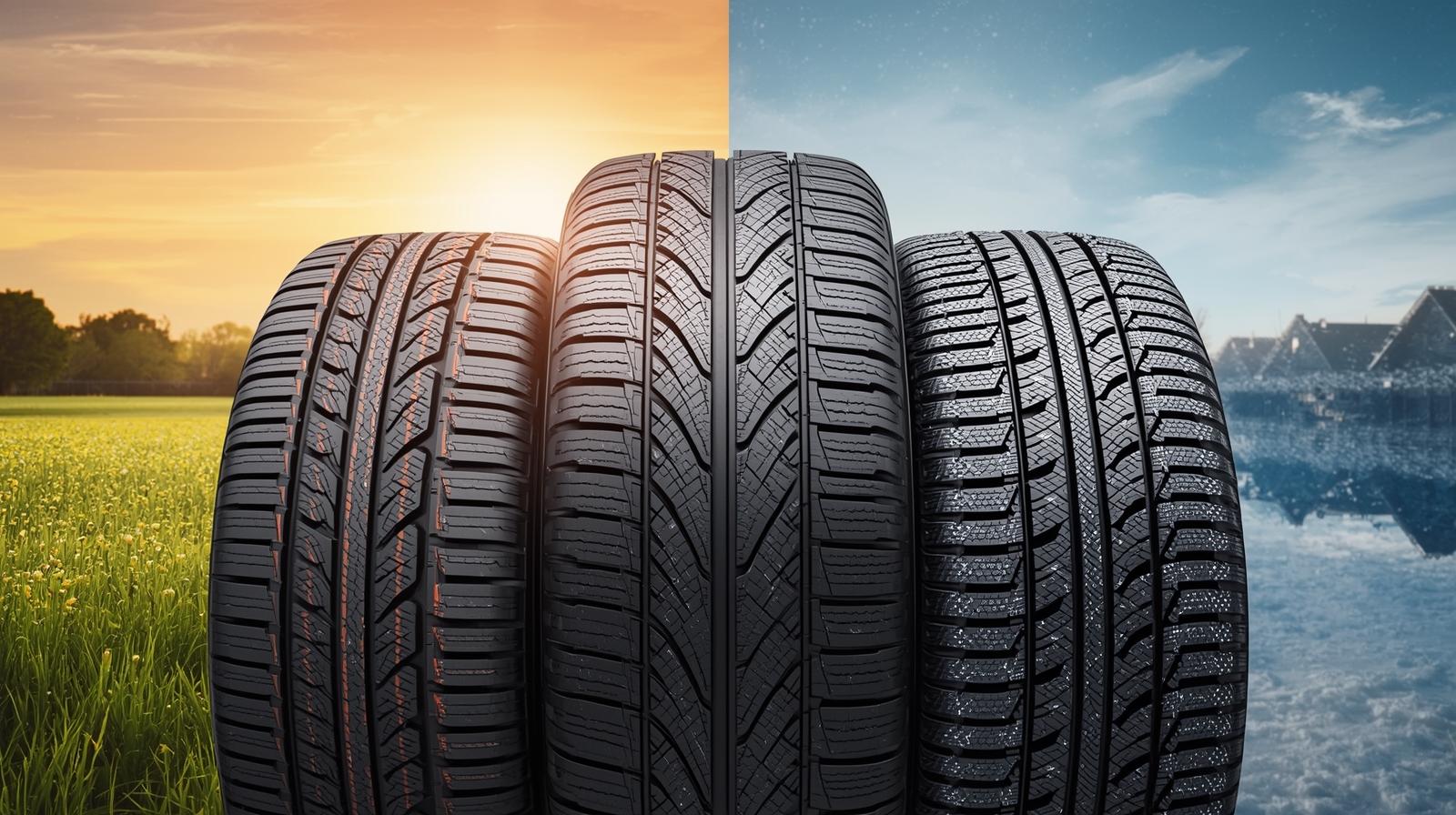
Summer vs Winter vs All-Season Tyres: Key Differences, Uses & Safety Tips
Which is the winner when it comes to summer vs winter tyres? Or are all-season tyres the better choice for Australian roads?
When you’re buying new tyres in Australia, questions commonly come up about seasonal tyres. Which should you choose? Summer, winter or all-season tyres? Each has its advantages, and the tyre you choose will depend on when and where you drive. In this article, we’ll outline the differences between each tyre type, so that it’s easy for you to make the right choice.
Read on to get answers to questions like, “Are summer tyres safe to use in winter?” and, “Can I use winter tyres in summer?”. Certain tyre rubbers are designed to operate in hot weather, and others, in cold. If you swap them round and use a winter tyre in summer or a summer tyre in winter, you’ll run into problems.
Let’s start with the main question: Why are there tyres for different seasons?
Why are there tyres for different seasons?
Obviously, different seasons throw up challenges to motor vehicles. In summer, there are hot and dusty roads. In winter, ice or snow. Obviously, these conditions challenge tyres in different ways, which is why they are designed with rubber density and tread patterns to suit the season. Let’s explore this in more detail.
Season-specific tyre rubber
Temperatures on road surfaces can vary significantly between winter and summer, which impacts tyre design. Summer tyres are made from a dense, firm rubber compound that can withstand high road surface temperatures, and general hot ambient temperatures. This firm rubber is less prone to rolling resistance in the heat, which means the tyre requires less energy from the engine to keep moving. Overall, fuel consumption is reduced.
Winter tyres are made from a softer rubber that’s flexible in the cold. This offers good traction on snowy and icy roads. On the downside, the softness of a winter tyre increases rolling resistance, so you won’t get optimal fuel efficiency when using winter tyres, though they’re the safest option to use during extreme cold.
All-season tyres use a medium rubber compound that stays flexible in both warm and cool temperatures. They won’t harden as quickly in winter or soften as much in summer, offering reliable grip and predictable handling year-round.
Seasonal tread designs
In addition to tyre rubber behaving differently in certain weather conditions, tread design also factors in.
Summer tyres have a shallow tread designed to grip onto dry and wet roads, and prevent aquaplaning (where water builds up between the tyre and the road, and causes the tyre to lose contact with the road).
Winter tyres have deep grooves as well as sipes (fine cuts) that grip ice and snow, and channel away any slush that enters the tread.
All-season tyres feature moderate tread depth with a mix of summer-style channels for wet grip and winter-style sipes for additional traction, making them versatile across light winter conditions and warm-weather driving.
How tyres act in different seasons
In hot weather:
- Winter tyres will become overly soft and lose stability, and this is one of the main disadvantages of winter tyres in summer. They’ll also wear out faster than summer tyres would.
- Summer tyres, with their dense rubber and shallow tread, will remain firm on hot roads, and on wet and dry surfaces.
- All-season tyres will offer reliable grip on hot roads, and remain stable. Braking on dry and wet roads is predictable, and the vehicle should remain stable.
In cold weather:
- Summer tyres may harden and lose grip with the road.
- Winter tyres will be flexible and maintain a sturdy grip. This enables the vehicle to accelerate, steer and brake in conditions where there might be snow, ice, or slush.
- All-season tyres offer the flexibility required to maintain reasonable traction in frost and light snow. Though their tread isn’t as effective as winter tyres, they’re a good in-between option for cold conditions.
Risks of choosing the wrong tyre for the season
Using the wrong tyre for the season will negatively impact vehicle handling, traction, and braking distance. Tyres are also more likely to wear out prematurely, and you’ll consume more fuel. In short, it’s safer, more durable and more efficient to use tyres matched to the season.
Does it matter in Australia?
Yes. Road surface temperatures can be particularly high in Australia. Even metropolitan areas require tyres that can handle high surface temperatures. For example, Sydney CBD experiences average maximum road temperatures of 30.1°C, which is slightly above the maximum recommended temperature for most Summer and All-Season tyres. During heatwaves, in areas where there’s darker asphalt and/or less shading from trees, road surface temperatures can reach anywhere between 50-75°C!
Therefore it’s crucial to have tyres with compounds that can withstand elevated road surface temperatures without becoming overly soft and losing grip on the road.
If you drive on Australian roads in temperatures below 7°C, you should be using winter tyres, which are designed to grip the road surface in cold conditions. So, if you’re heading to the snow during winter, or you live in an alpine region, swap to winter tyres, but ensure you swap back again when you’re no longer in those areas.
Which seasonal tyre should I choose?
For best vehicle performance, and to prolong the life of your tyres, use tyres designed for the conditions you drive in. If you mainly drive in hot climates, choose summer tyres. Drive in alpine areas with extremely cold temperatures and icy, snowy roads? Swap over to winter tyres. And if you drive in a temperate location, where there’s a combination of both hot and cold weather, but no extremes, then all-season (all-weather) tyres are a good bet.
Note, there’s little justification in Australia to drive only on winter tyres. Even if you live in an alpine zone, winter tyres would only be required at certain times of year, when conditions call for them.
How do I identify a summer, winter or all-season tyre?
The best way to check a tyre’s type is to refer to the manufacturer’s specifications. If you don’t have those on hand, you can usually work it out from a visual inspection. Here’s what to look for:
Summer tyres:
- May be marked with the word, “Summer”
- Tread patterns are shallow, straight or slightly curved
- Few sipes
- No ”Snow” or ”M+S” markings.
Winter tyres:
- Very deep tread grooves and numerous sipes
- Will be marked with the 3PMSF (Three-Peak Mountain Snowflake), “M+S” (Mud & Snow), or “STUDLESS”.
All-season/All-weather tyres:
- Moderate tread depth
- Multiple sipes
- May carry the M+S (Mud & Snow) marking or 3PMSF.
Using seasonal tyres: safety tips
- Avoid using tyres out of season. Opt for all-season tyres for the most versatile option, or else swap between winter and summer tyres when conditions require it.
- Never mix seasonal tyre types, as the tread between tyres won’t match and vehicle imbalance may occur. You may even lose control of your vehicle during hard braking or other emergency manoeuvres. That means, no winter tyres and summer tyres fitted to your vehicle at the same time!
- Don’t buy pre-used winter tyres. (You don’t know how those tyres have been used or stored.)
- Never use a tyre that’s too old, even if it’s a winter tyre you rarely use. Aged tyres not only lose their tread over time, but their rubber compounds may harden. For help checking the age of your tyres, see this article: How long should your car tyres last?
Key features of summer, winter, and all-season tyres
Here’s a quick-check table that lets you know the key differences between the different seasonal tyres.
Summer vs winter vs all-season tyres: Major differences
| Summer Tyres | Winter Tyres | All-Season Tyres |
|---|---|---|
| Dense rubber compound designed for durability and fuel efficiency in the heat. | Pliable rubber that’s flexible in the cold. | Medium rubber compound that stays flexible in both warm and cool temperatures. |
| Shallow tread pattern that reduces aquaplaning and performs well on dry and wet roads. | Deep, wide tread and numerous sipes for added traction on ice, snow and slush. | Moderate tread depth plus extra sipes for reliable grip on both wet and dry roads. |
| High fuel efficiency and responsive handling in hot conditions. | Maximum grip in cold conditions. | Reliable performance all year round. |
Quick comparison table: Summer vs winter vs all-season tyres
| Tyre Type | Temp Range | Snow/Ice Grip | Wet Grip | Fuel Efficiency | Best Use | Quick ID |
|---|---|---|---|---|---|---|
| Summer | 7°C – 30°C+ | ❌ Poor | ✅ Good | ✅ High | Hot, dry conditions | Smooth tread, few sipes, no snow/M+S |
| Winter | <7°C | ✅ Excellent | ✅ Excellent | ❌ Low | Snow, ice, alpine areas | 3PMSF symbol, M+S, sometimes “STUDLESS” |
| All-Season | -10°C – 30°C | ⚠ Light snow | ✅ Good | ⚠ Moderate | Everyday driving, mixed conditions | M+S marking, sometimes 3PMSF, balanced tread |
FAQs
What’s the difference between winter, summer tyres and all-season tyres?
Summer tyres use a dense rubber and shallow tread for fuel efficiency, responsive handling, and performance on dry and wet roads. Winter tyres have pliable rubber and deep, heavily siped tread to maximise grip on ice, snow, and slush. All-season tyres feature a medium rubber compound with moderate tread and extra sipes to provide reliable, year-round performance in both warm and cool conditions.
All-season tyres vs summer tyres: which is better for Australian roads?
If you need to drive in a range of temperatures across seasons, all-season tyres are a more versatile choice, however summer tyres are fine for temperatures between 7°C and 30°C+.
What’s the summer tyre temperature range?
Summer tyres are designed for temperatures between 7°C and 30°C+.
Are summer tyres ok all year round?
Yes, if you live somewhere where temperatures don’t dip below 7°C. They will also be the best option for extremely hot road surface temperatures.
All-season tyres might be a better choice if you drive in a range of temperatures (between -10°C – 30°C). And winter tyres are a good option if you drive only in temperatures below 7°C.
Can I use winter tyres in summer?
It’s not recommended, unless you drive in high-altitude areas, where summer temperatures regularly sit below 7°C. Winter tyres aren’t designed to handle hot, dry roads, so they will wear fast and not perform efficiently.
Can I use summer tyres in winter?
Summer tyres become hard and lose grip in cold conditions, increasing the risk of skidding and accidents.
Which are the best summer tyres for winter?
You would only drive on summer tyres during winter if your winter temperatures don’t drop below 7°C. So, those living in the NT, or in far north Queensland or WA, can use summer tyres all year round.
When it comes to choosing which summer tyre, it depends where you drive. For sealed roads, a summer or touring tyre will work well. For off-road or mixed terrain driving, you might need a more robust summer tyre that can handle the terrain. A Jim’s Mobile Tyres expert can assist you to select the best tyre option for your driving needs.
What are M+S markings?
“M&S” is a marking that appears on some winter and all-season tyres. It refers to Mud and Snow, and means the tyres have good traction in muddy, snowy conditions.
Can I use M+S tyres in summer?
M+S tyres can be suitable for wet, muddy conditions in summer, however aren’t designed to withstand high summer temperatures. So, whilst you can use them in the heat, there are downsides:
- They have a higher rolling resistance than summer tyres, so aren’t as fuel efficient.
- They won’t handle precisely on hot or dry roads, as they’re made from soft, pliable rubber, which becomes even softer in the heat.
- The tread on M+S tyres will wear out faster in summer than tread on summer or all-season tyres.
Do I need snow tyres in the summer in alpine areas?
Probably not. You’d only need them if temperatures dip below 7°C, it’s snowing, or roads are icy. Otherwise, all-season tyres/summer tyres are a better option.
Can I mix winter and summer tyres?
No. It’s unsafe to mix seasonal tyres, as the variation in tyre tread will result in reduced stability and loss of control of the vehicle. Braking will also be impacted, as the different tyres have different stopping distances.
Are summer tyres ok all year round?
Summer tyres are suitable in warm conditions but are not safe in cold, icy, or snowy weather.
How to tell winter tyres from summer tyres?
Summer tyres have shallower treads and harder rubber for hot conditions, whereas winter tyres have deeper treads, more sipes, and softer rubber for cold weather. Winter tyres may also feature 3PMSF, M+S, and “STUDLESS” tyre markings.
Which tyres are best for Australian roads?
It depends on your region and conditions: summer tyres suit hot, dry areas; winter tyres suit cold, icy regions; all-season tyres are a versatile option for mixed climates.

Subscribe to our Newsletter

Read More

Advantages of Using a Mobile Tyre Service
Jim's Mobile Tyres offers a convenient, professional service in all things tyre-related. Whether it be tyre rotations, tyre-fitting, tyre pressure checks or emergency breakdown repairs we've got you sorted with our well-experienced technicians who meet you wherever you are in Melbourne, Sydney, & Newcastle with a fully-equipped van.
Know When To Rotate Your Tyres
Because cars cost so much money to purchase and maintain, finding ways to reduce their upkeep costs is always welcome. A simple task such as rotating your tyres can ensure they last longer and have even wear.
What PSI should my car tyres be?
With so much on our minds, it’s easy to forget about regular tyre pressure checks. But it’s in your interests not to ignore car tyre pressure checks.