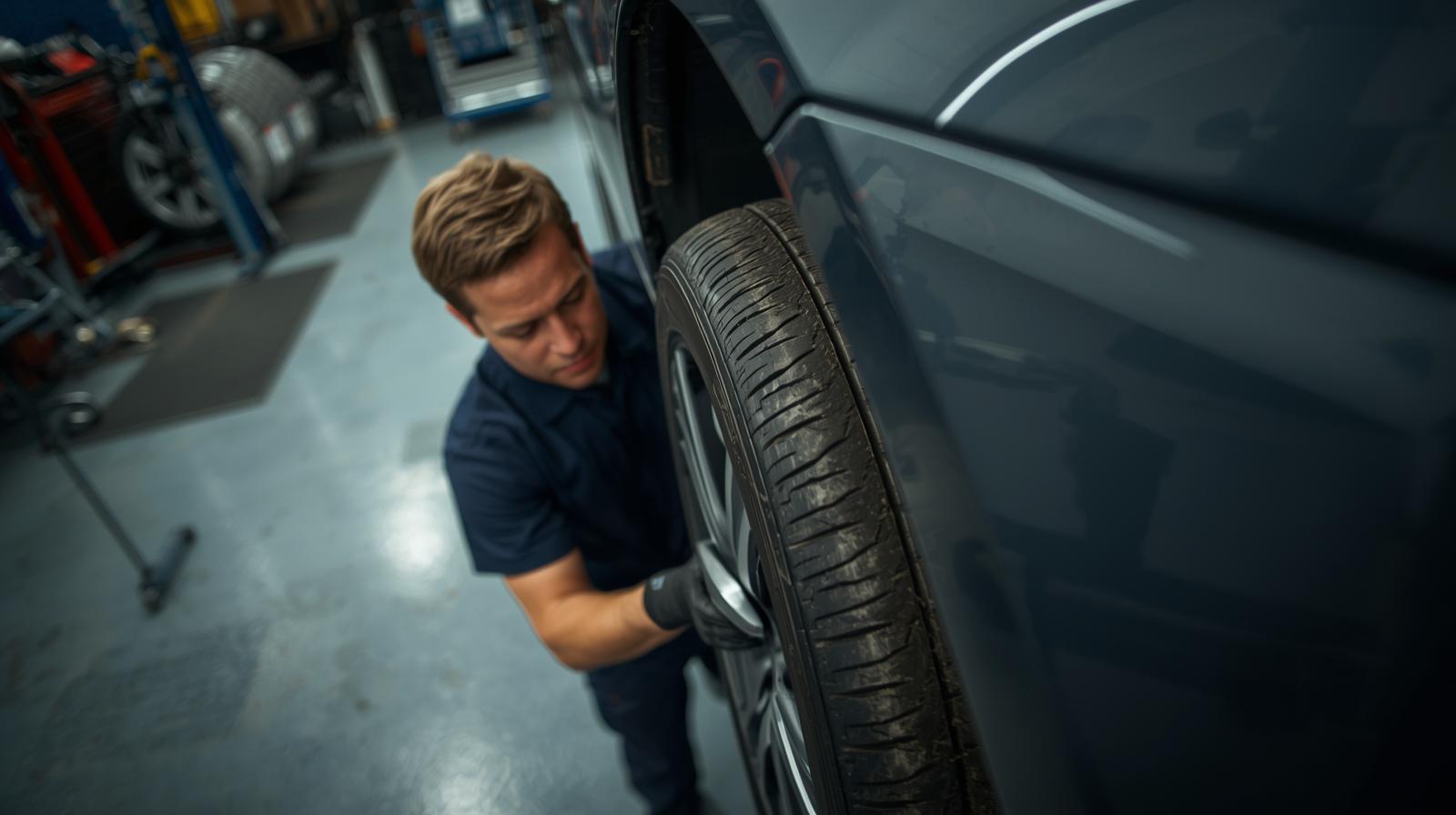
How often should you change your car tyres?
One of the most common questions vehicle owners ask Jim’s tyre specialists is, “How often should I change my tyres?” Your car’s tyres might look fine and the ride feels smooth, so it’s fair to assume you don’t need a car tyre change. However there are certain factors that indicate a tyre change is necessary, and we’ll cover those in this guide.
How often should you change tyres?
Knowing when to change tyres helps you control your vehicle, avoid tyre blowouts, and ultimately, stay safe on the road. Old or worn tyres may perform poorly, and may not grip the road effectively. This is especially hazardous when employing the brakes on wet roads.
So, how often should you change your tyres in Australia?
Consider buying new tyres when:
- You’ve driven 40,000-60,000 km on those tyres, or
- You’ve used the tyres for 5-6 years (whichever comes first).
If you aren’t sure, schedule a tyre check with Jim’s Mobile Tyres. Our tyre professionals will let you know if you can continue on your current tyres, or if tyre replacement is required.
How many kilometres do tyres last in Australia?
Australian roads can pose real challenges to tyres. Our roads can become very hot, especially during the height of summer. Add to that, if you drive off-road in Australia, you’re likely to encounter rough and unpredictable surfaces that accelerate tyre wear.
On the question of how many kilometres do tyres last in Australia, here’s a guide to tyre lifespan according to vehicle type, as suggested by major manufacturers such as Michelin and Bridgestone:
- Passenger cars: 40,000–60,000 km
- 4WDs & SUVs: 35,000–55,000 km
- Utes & vans: 30,000–50,000 km
- High-performance tyres: Often under 40,000 km.
Note, tyre manufacturers don’t guarantee a tyre lifespan, as numerous factors can impact tyre life. So whilst the above guide gives an approximation of how many kilometres you’ll get out of your tyres, actual tyre life will depend on your individual tyre use.
For example:
- If you predominantly drive in urban areas, or on highways at predictable speeds, expect tyres to wear at the lower end of the kilometre range.
- If you mostly drive in heavy, city traffic, with lots of stopping, starting and turning, tyres will wear faster.
- Tyres will also wear faster if you carry or tow heavy loads.
How do you know if your tyres need changing?
There are a range of signs that indicate you need to buy new tyres. Some relate to how your vehicle handles, and some can be observed when you inspect your tyres.
Vehicle handling signs:
- Vibrations: Your car vibrates when you drive. This might be a result of internal tyre damage or uneven tyre wear.
- Long stopping time: Your car takes longer to stop than it should, especially on wet roads. A longer stopping distance may signal that your tyres have lost sufficient tread to do their job properly.
Note, by the time worn or damaged tyres are affecting your drive, it’s likely past the point when you should have replaced your tyres. Regular tyre inspections by professional tyre services can prevent these driving impacts.
Tyre inspection signs:
- Uneven wear: Uneven wear will look like patches of tyre that have worn in one area of the tyre, such as the centre, or on one side of the tyre. These patches occur for a variety of reasons, including incorrect wheel alignment, inappropriate tyre pressure, or failing to rotate tyres.
- Bald patches: These can result from poor wheel alignment, hard breaking, or wheel lock-up (when wheels fail to rotate during hard braking, causing skidding and accelerated tyre wear).
- Blisters or bulges: If you notice these on your tyres, it could indicate structural weakness in the tyre. Internal tyre damage can result from driving over road debris and potholes, or from hitting the kerb, which can allow air to infiltrate weakened areas of the tyre wall.
- Sidewall cracks: General wear, UV exposure and heat can all cause the rubber between the wheel rim and the tread to crack over time.
- Low tread depth: Low tyre tread depth will result in reduced grip on the road, and this could prove hazardous if you’re driving in wet conditions. Tyres have a recommended minimum depth of 3 mm. (Read on for an easy way to measure tread depth).
Note, sometimes tyre wear is difficult to identify without an expert’s keen eye. A regular inspection by a tyre specialist is a good way to ensure your tyres are fit to be driven on.
What is the 3% rule for tyres?
The 3% rule for tyres dictates that replacement tyres must not differ in total diameter by more than ±3% from the original manufacturer’s specifications. This guideline exists so that speedometer accuracy and safety systems like ABS/traction control function correctly. It also ensures better vehicle handling.
Aim for 3 mm Minimum Tread Depth
The legal minimum tread depth in Australia is 1.5 mm, however a better depth to adhere to is 3 mm. When tread depth drops lower than 3 mm, tyre safety has already dropped.
Replacing tyres at 3 mm helps to:
- Reduces braking distances
- Improve grip in wet weather, and hence, minimise the risk of aquaplaning (where your tyres lose contact with the road)
- Provides better vehicle control.
How do you check your tyre tread depth?
The simplest way is the coin test. You’ll need either a 20-cent coin or 10-cent coin. Place the coin into one of the deep, central grooves of the tyre.
- 20-cent coin: If you can see the bill of the platypus, your tread is likely under 3 mm, and you need to get the tyre changed.
- 10-cent coin: If you can see the outside band of the coin, then the tread is likely under 3 mm, and a new tyre is needed.
What about tyres that haven’t been used?
How long do tyres last if not used? It’s a good question, as some of us keep an extra tyre in the garage or a spare in the boot, and think it’ll be good-to-go regardless of age. However this isn’t always the case. Older tyres are more likely to fail suddenly, particularly at highway speeds, therefore tyres should never be used when they’re over 10 years old, even if unused, (the age of use might be even shorter than that, and the advised range is between 6 and 10 years).
What causes unused tyres to degrade?
Regardless of whether tyres are driven on or not, tyre rubber degrades when exposed to:
- Oxygen
- Chemical vapours when stored in a shed/garage
- UV light
- Heat.
Even if the tyre is protected from all these exposures, it will still degrade over time.
When to replace car tyres that haven’t been used
Inspect your unused tyres every 5-6 years, and replace them every 6-10 years, regardless of tread depth. This includes your spare tyre. How do you know a tyre’s age? You can check the Date of Manufacture (DOT) stamp on the tyre.
How to check the manufacturing date (DOT Stamp)
To check a tyre’s manufacture date, look at the 4-digit code next to the DOT label on the tyre sidewall. The last four digits indicate:
- Week of manufacture, and
- Year of manufacture
For example, 1819 means the tyre was made in week 18 of 2019.
What wears tyres out?
Tyres naturally wear with use, however a range of factors may accelerate wear and tear on your tyres. These include:
- The type of vehicle you drive. Heavy vehicles, utes, vans and SUVs weigh more than passenger vehicles, so there’s more stress on the tyres. Also, different drivetrains (e.g., 4WD vs. 2WD) can create uneven or faster tread wear.
- The surfaces and road temperatures you drive on. Extremely hot roads will increase potential for cracking and blowouts, and rough surfaces can damage the internal structure of a tyre.
- Your driving manner. Aggressive driving, like hard braking, hard turns and driving at excessive speeds may create added friction and wear tyres faster.
- Road hazards. If you drive over potholes or hit the curb, it may damage your tyre’s internal structure.
- Poor tyre maintenance. Maintaining tyre pressure appropriate to your driving needs, and having your tyres rotated and your wheels correctly aligned, all help to prolong the life of your tyres.
How to Make Your Tyres Last Longer
While tyres will eventually wear out, proper care can significantly extend their lifespan.
1)Rotate tyres regularly
Every 8,000–10,000 km, arrange for a tyre rotation. Rotating your tyres will ensure they wear more evenly.
2)Maintain tyre pressure
Tyre pressure should be appropriate to your vehicle, and the load you are carrying or towing. If your tyres are under-inflated, there’s less fuel efficiency and tyre wear increases.
If tyres are over-inflated, grip on the road is reduced and you may have uneven wear.
How often should you check tyre pressure? Monthly inspections are ideal, and always adjust inflation before long trips, carrying loads and driving off-road.
Find out more about How to get ideal tyre pressure for your car?
3)Check wheel alignment
When your vehicle’s wheels are poorly aligned, tyre wear can be rapid and uneven. If you notice your car pulls to one side, it could signal poor wheel alignment. (Jim’s tyre specialists can inspect your tyres and identify signs of improper alignment.)
4)Avoid overloading your vehicle
Carrying extra weight in your car can strain tyres. Vans, utes and towing vehicles commonly need to replace tyres more often than lighter vehicles. Therefore, try your best to keep your vehicle as light as possible, adjust your tyre inflation if you do need to carry extra weight, and keep in mind that your tyres will wear earlier if you carry or tow heavy loads. (Ask a Jim’s Tyre expert for advice on what air pressure you need for that big trip.)
FAQs
How long does a tyre last on average?
Driving on Australian roads, most tyres last 40,000–60,000 km or for 5–6 years, depending on driving conditions and how you maintain them.
How do you know if tyres need changing?
Low tread depth, cracks, bulges, vibration, uneven wear, or reduced braking performance are key warning signs.
What is the 3% rule for tyres?
This rule is that, regardless of the legal minimum tyre tread being 1.5 mm, it’s safer to replace tyres at 3 mm tread depth. Braking safety and wet-weather grip will be impacted if the tyre tread is less than 3 mm.
Are there other ways to check tyre tread depth than with a coin?
Of course! Tyres have tread wear indicators (tread bars) that show you when a tyre should be retired. How do they work? When the tread wears down to the same level as the tread wear indicators, your tyre has reached its minimum safe tread depth and should be replaced. You can also use a ruler to measure the tread depth.
When should I change my tyres in Australia?
- When your tyre tread reaches 3 mm
- If there is visible damage to a tyre
- If you’ve hit a road hazard like a pothole
- If your tyres have been in use for 5-6 years.
Should I change tyres individually or as a set?
In circumstances where a tyre is damaged, but the remaining tyres are all ok and well within their recommended use date, you can change an individual tyre. The replacement tyre must match with the other tyre on the same axle in terms of type, tread depth, and size.
If a good match can’t be found, a tyre specialist will usually recommend you change both tyres on the same axle, as this will ensure better vehicle handling.
How long do tyres last if not used?
Unused tyres still degrade over time, therefore, replace them after 6–10 years.
Need new tyres or a tyre check? Jim’s Mobile Tyre specialists can do it all, and we come to you! It’s the ultimate in convenience!
Contact us to buy new tyres or to book in a tyre service.

Subscribe to our Newsletter

Read More
Best Practices for Timely Tyre Replacement- Knowing When It’s Time to Change Your Tyres
Tyres perform a vital role for our vehicle. They not only provide a buffer between our wheels and the road, but also provide the essential grip we need when driving in various conditions. In addition, having the right tyres on our vehicle for the driving conditions, and ensuring they’re in good condition, improves overall fuel efficiency. That’s why it’s so important to ensure that tyres are still fit to be on the road.

How to Buy Tyres In Australia- 2026 Guide
Buying tyres in Australia shouldn’t be difficult. There are numerous avenues to source tyres, including in-store tyre sellers, online retailers and mobile tyre fitters. There are also multiple tyre brands selling quality products, so if you have the budget available, you can come away from a purchase with pretty reliable tyres. However with so much choice available when you want to buy new tyres, it can be hard to know which is the best option for you.

A Comprehensive Guide to Choosing the Perfect Tyres for Your SUV or 4WD
When it comes to your SUV or 4WD, your choice of tyres isn't just about aesthetics. Tyres profoundly impact your safety, your vehicle's performance and your overall driving experience. But when there are so many tyres on the market for SUVs and 4WDs, how do you know which is best for your vehicle?